

Friday Kaizen is my weekly note on how Six Sigma ideas get used in real work. Last week was about small fixes. This week is visual management, using something you may have already seen on your study plan.
Am I ready to book it?
It’s one of the most common questions I get from students.
So we built a readiness meter. It sits on every member’s study plan. It reads your mock exam scores and gives you one of three answers: Not yet, Getting close, or Ready to schedule.
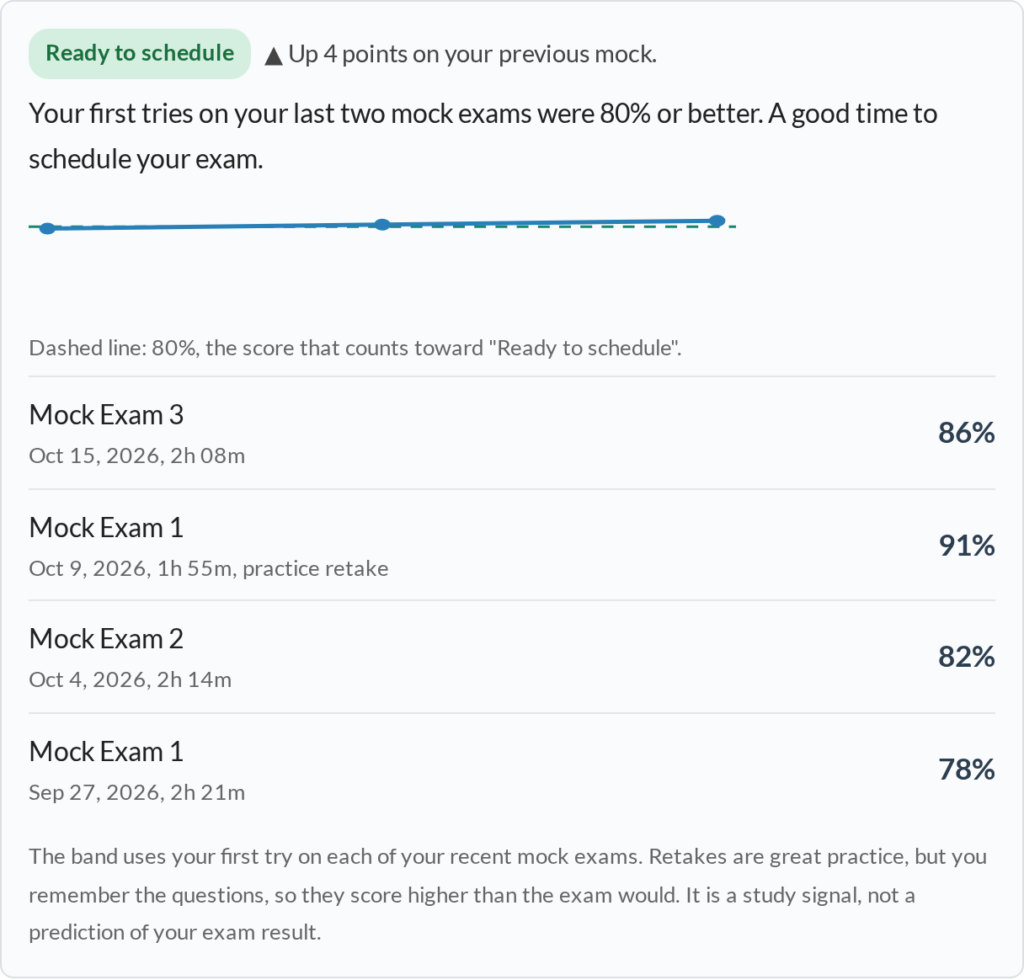
A visual management example
That’s visual management. You shouldn’t need a spreadsheet to know where you stand. One look should do it.
Factories use a status board at the line. We use a colored pill.
But a pill is only as honest as the rule behind it.
The gap we found
Version one was simple. Two mocks in a row at 80% or better? Ready to schedule. It counted every full attempt.
Then we tested it against the mock scores on the site. Retakes jumped out. A retake of the same mock scores about 9 points higher than the first try.
That’s not learning. That’s memory. (Totally normal, by the way. You’ve seen those questions before.)
Change it or leave it?
Not every gap deserves a fix. Before I touch something members rely on, I ask three questions.
What does leaving it cost us? This meter drives the biggest decision you make with us: when to book. Left alone, about 1 in 16 “Ready to schedule” readings would have come from retakes. Book too early and you’re out an exam fee. We’re out your trust. And since our study guides carry a pass guarantee, it’s real money for us too.
What does changing it cost? Not much. One rule. Display only. Nobody’s scores change, and I can flip it back in a minute. The catch? A few members would see their band drop overnight. Nobody likes that.
Can we test it first? Yes. Every mock score on the site, before anyone saw a thing.
Big cost to leave it. Small cost to change it. Testable. Easy call.
Two other ideas didn’t make the cut. Blocking retakes? No. They’re good practice. Raising the 80% bar? Not yet. There’s no data behind it, so we’re collecting real exam results first.
What we did
We wrote the rule down. Only your first full try at each mock counts toward readiness.
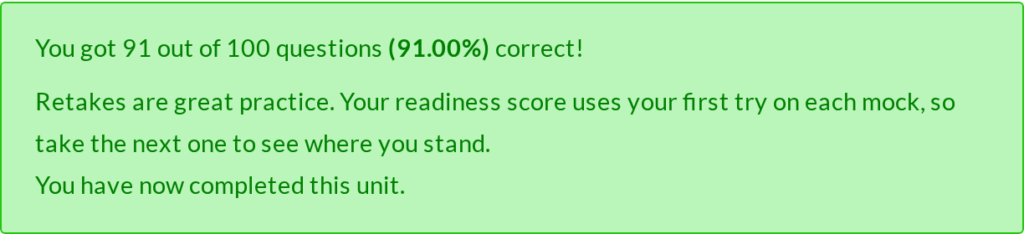
Retakes still show on your scoreboard. They’re labeled “practice retake” now, and they don’t move the meter.
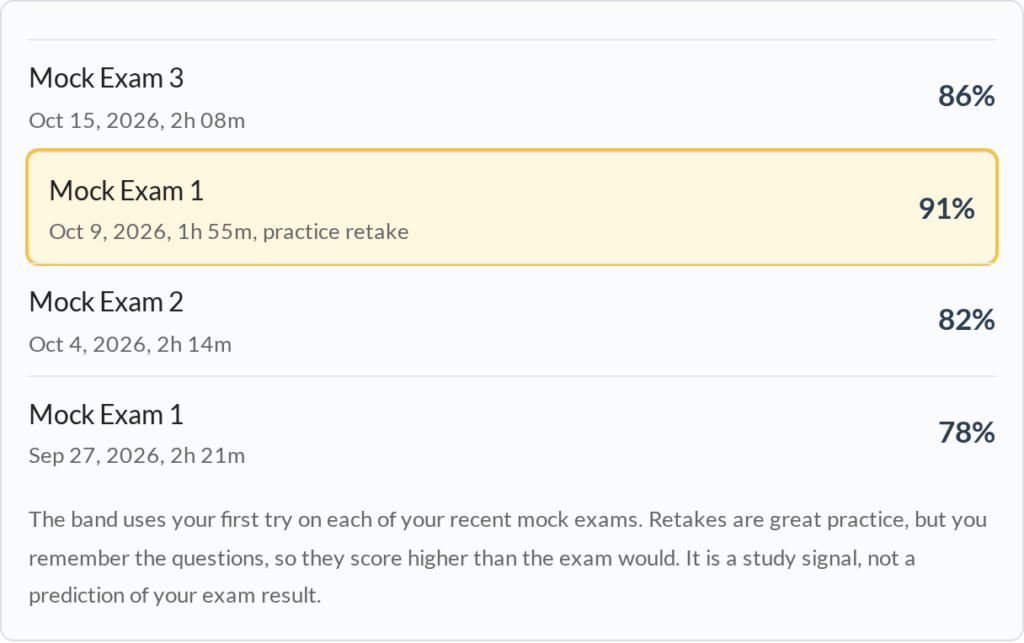
The mock result page says so too, right under your grade.
The result
We ran both rules on the same mock scores. About 5% of readiness readings changed.
The retake-driven “Ready to schedule” readings, about 1 in 16, now say “Getting close” or “Not yet”. A few moved up, because a weak retake no longer hides a strong first try.
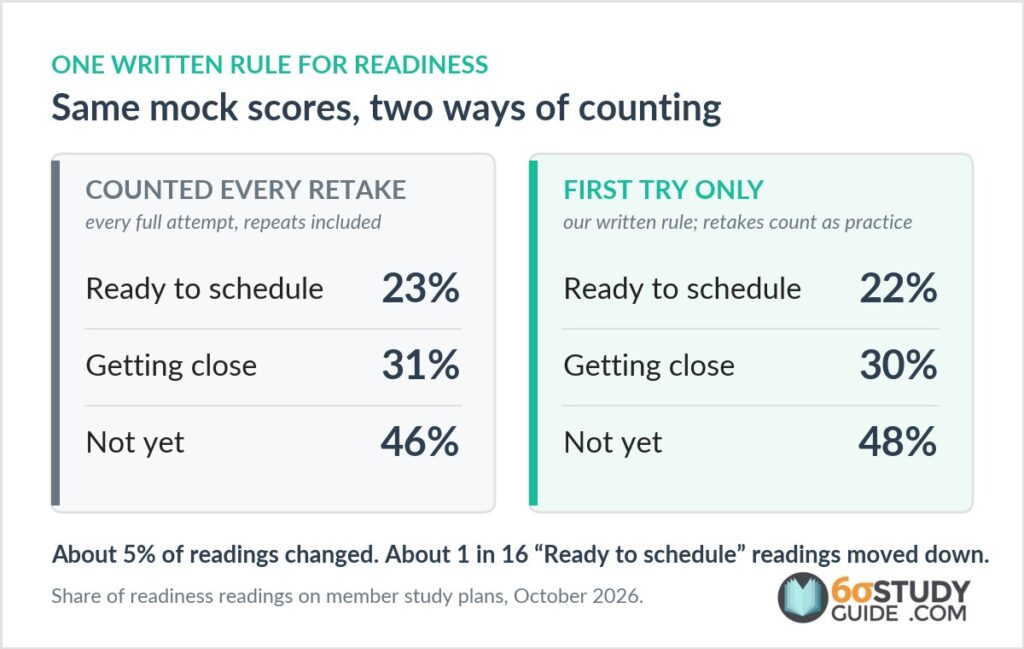
Green means one thing now. Your first tries say you’re ready.
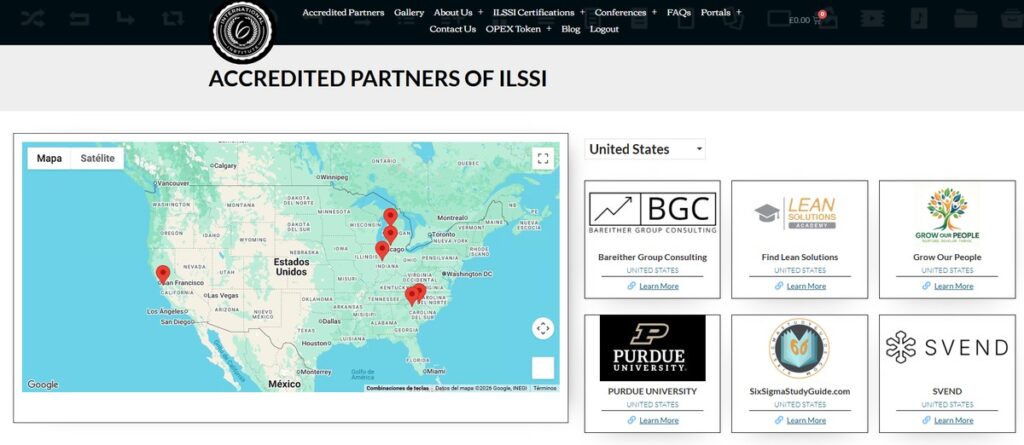
News: we’re in ILSSI’s partner directory
Six Sigma Study Guide is now listed in the International Lean Six Sigma Institute (ILSSI) partner directory. Prepping for an ILSSI exam? Pick ILSSI on your account page. Your course home will point you to the ILSSI-format mock.
Try your own visual management example this week
Pick one status signal your team looks at. A red, yellow or green on a project tracker. A “done” column on a board. A light on a dashboard.
Write down the rule behind it. One sentence.
Then ask two teammates to read the same item using that rule. Different colors? The signal isn’t telling the truth yet.
Leave a comment with your signal and its rule. I read these. The good ones might show up in a future Friday Kaizen (only with your permission).
Best, Ted.
“The Six Sigma Study guide is an invaluable resource for self paced learning; the online tests are especially helpful as there is a detailed explanation provided with the answers. I highly recommend Ted Hessing’s study guide”
Nicola L., LinkedIn Recommendation
When you’re ready, there are a few ways I can help:
First, join 12,000+ other Six Sigma professionals by subscribing to my email newsletter. A short read every Monday to start your work week off correctly. Always free.
* * *
If you’re looking to pass your Six Sigma Green Belt or Black Belt exams, I’d recommend starting with my affordable study guide:
1)→ 🟢Pass Your Six Sigma Green Belt: a study guide organized by the exam Body of Knowledge, 1,000+ practice questions with detailed answer explanations, and 8 full-length mock exams
2)→ ⚫Pass Your Six Sigma Black Belt: the full Black Belt Body of Knowledge, 2,000+ practice questions with detailed answer explanations, and 8 full-length mock exams
You’ve spent so much effort learning Lean Six Sigma. Why leave passing your certification exam up to chance? This comprehensive study guide offers 1,000+ exam-like questions for Green Belts (2,000+ for Black Belts) with full answer walkthroughs, access to instructors, detailed study material, and more.
Thousands have used this system to prepare. Join them here.